Greek And Liberian-Flagged Ships First To Cross The Strait Of Hormuz After Ceasefire
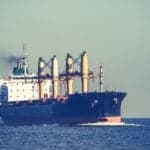


Two vessels have become the first to pass through the Strait of Hormuz after the United States and Iran agreed to a ceasefire.
According to ship tracking data from MarineTraffic, the Greek-owned bulk carrier NJ Earth crossed the strait at around 08:44 UTC.
Earlier, the Liberia-flagged vessel Daytona Beach had already transited at about 06:59 UTC, shortly after leaving the Iranian port of Bandar Abbas at 05:28 UTC.
These are the first confirmed ship movements since both sides agreed to an overnight ceasefire, which is expected to last for two weeks.
Iran’s Foreign Minister Abbas Araghchi said ships would be allowed to pass during this period, but only after coordination with Iran’s armed forces and keeping technical limits in mind.
The agreement came just hours before a deadline set by former US President Donald Trump, who had warned of further escalation if the strait was not reopened. He later announced a suspension of bombing following the ceasefire deal.
The Strait of Hormuz connects the Gulf to open waters and is one of the busiest energy routes in the world.
Around 20 million barrels of oil pass through it every day, which is nearly one-fifth of global consumption. It also carries a large share of global LNG trade, with Qatar being a key exporter.
Shipping in the region had slowed sharply due to recent tensions. Data shows that from March 1 to April 7, only 307 commodity carrier crossings were recorded, a drop of about 95 percent compared to normal levels.
At the same time, around 800 ships are believed to be waiting in the Gulf, according to shipping publication Lloyd’s List, with many owners preparing to move as soon as it is considered safe.
Some of the recent transits appear to be taking place along specific approved routes, including corridors near Larak Island that have been used in the past few weeks. Tracking data also showed that the Greek-owned vessel kept its transponder on while passing through the strait.
Despite the first movements, there is still uncertainty about how the ceasefire will work in practice. Iran has said passage will be allowed with certain conditions, while the US has described the reopening as immediate and safe. It is not yet clear if both sides agree on the same terms.
There are also questions about possible transit fees. Some regional sources have indicated that Iran and Oman may charge ships for passage, with unconfirmed reports suggesting a fee of around $2 million per vessel.
Iran’s parliament is said to be discussing a law to formalise such charges, although the Strait of Hormuz has never had a toll in its history.
Shipping and insurance experts say companies will remain cautious. The Lloyd’s Market Association noted that while the ceasefire is a positive step, the area will still be treated as high risk.
Shipowners are expected to move vessels only when they feel it is safe, and a full return to normal traffic is unlikely in the short term.
References: greekcitytimes, euronews
Want to read more?
Check out the full article on the original site